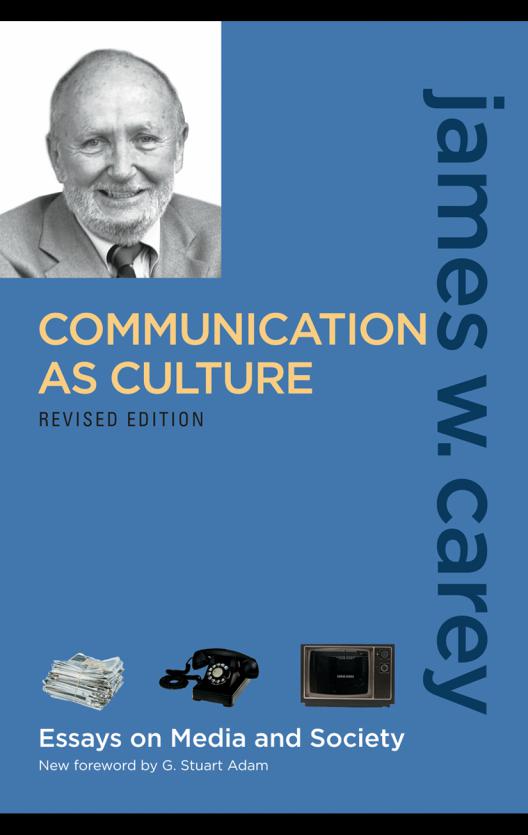
Focusing on the chapter "A Cultural Approach to Communication."
So, how does this chapter begin?
Why does Carey begin by highlighting a 'preposterous idea' from James Dewey (the idea that communication is wonderful)?
Who was John Dewey, by the way?
John Dewey, a pragmatist philosopher who wrote about democracy and education
What is the "transmission view" of communication?
But something happens to the religious connotations. What happens?
He talks about the ritual view in relation to transmission. What is the basic relationship?
What is the ritual view?
So it's something very different from the transmission view. How?
He notes the ritual view has become secularized, much as the transmission view has. What are examples of this?
Why do (American) academics hold onto the transmission view over the ritual view?
To further contrast the transmission and ritual views, he looks at one particular object. What object?
He notes that the transmission view and the ritual view have run their course. We need a fresh view. What is the view he offers?
“Communication is a symbolic process whereby reality is produced, maintained, repaired, and transformed.”
What does this mean? (Let's break this up into parts.)
What does "symbolic process" mean?
What is the relationship between "a symbolic process" and "reality"?
What about "maintaining reality"? Can you think of examples of maintaining reality?
What about "repairing reality"? Examples?
What about "tranforming reality"? Examples?
Meta question: how does our conception of the word "communication" shape how we view the world?